Buying a pied-à-terre in Madrid: why Salamanca
A pied-à-terre is a fixed base in a city that isn't your primary residence: the logical alternative to a hotel for anyone who travels to Madrid frequently, has business here, or has children studying in the city. Unlike a holiday second home, it isn't meant to generate rental income or host long stays — it's meant to be ready whenever its owner arrives, even if that's just one week a month.
Why Salamanca is usually the starting point
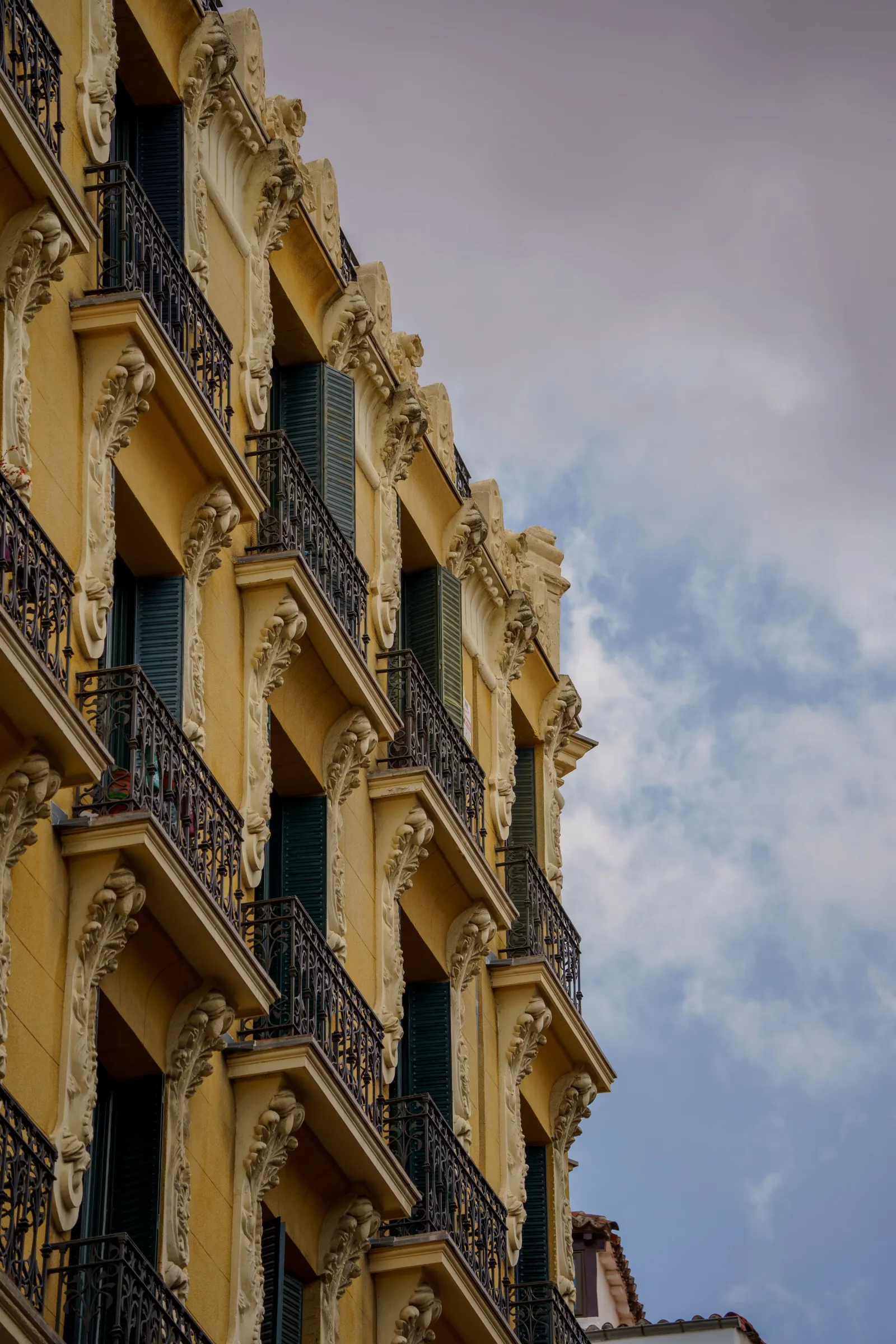
When an international client asks us for a pied-à-terre, the conversation almost always begins in the Salamanca district. That's no coincidence: noble buildings with high ceilings, physical door staff, proximity to El Retiro, and the best retail and dining in the city. According to Idealista, the average price in the district is around €10,100/sqm (May 2026), the highest in Madrid capital, sustained by relentless international demand and very low rotation of good product.
Real prices by sub-area
Within the district there are notable differences. Recoletos, with the grandest buildings and proximity to Castellana, trades between €11,500 and over €15,000/sqm on refurbished product. The Velázquez–Lagasca–Núñez de Balboa core sits around €10,000–12,500/sqm. Goya offers the same neighbourhood location with more reasonable upside: between €8,500 and €11,000/sqm, and a more genuine local life, with neighbourhood shops and less formality. Lista, in the southern strip near Manuel Becerra, is the most accessible option within the district, between €7,500 and €9,500/sqm, without losing the Salamanca address.
Which layout works best for a pied-à-terre
Unlike a permanent home, the ideal pied-à-terre isn't about maximising square metres — it's about minimising friction. The formats most requested by our clients are 70–110 sqm flats, with one or two bedrooms, a high floor with natural light, and — where possible — a lift and a secondary service entrance to ease maintenance while the owner is away. Penthouses with a small terrace also work very well: they add a sense of retreat that offsets the lack of space. We avoid recommending ground floors or dark interior flats: they appreciate the worst and feel the worst during short stays.
Other areas to consider
Salamanca isn't the only answer. Chamberí, especially Almagro, offers a more authentic and less formal neighbourhood life, with prices between €8,000 and €13,000/sqm depending on the street, and a better quality-price ratio than Salamanca. Retiro appeals to those who prioritise the park and quiet over an intense social scene, with a premium of up to 30% on buildings with direct views. The right choice depends on the profile: status and social activity point to Salamanca; authenticity and calm, to Chamberí or Retiro.
Buying as a non-resident
There is no legal restriction on a foreigner buying in Madrid, regardless of nationality or visa status, although ownership does not grant residency rights. The real challenge isn't legal but logistical: obtaining the NIE, understanding a purchase process with different timelines and players than in the US, UK, or Latin America, opening a Spanish bank account to smooth notary and tax payments, and verifying the property is free of charges before signing. Buying without your own representation, relying solely on the seller's agent, is where we see the most costly mistakes happen.
Taxes and costs
Purchase costs on a resale home in Madrid typically add around 6 % to 7 % to the price, and considerably more on new-build. It is worth building them into the budget from the start. The full breakdown, with worked examples by price and the difference between resale and new-build, is in our guide to taxes and costs when buying a home in Madrid.
Financing
The vast majority of our clients buy in cash. For those who prefer financing, mortgages for non-residents are available through Spanish banks, though on different terms than for a tax resident: lower maximum loan-to-value (typically 60–70% of appraised value) and heavier documentation requirements.
How much you can negotiate on a pied-à-terre in Salamanca
It follows the same pattern as the rest of the district: well-positioned product (market price, good building, no defects) closes at 3–6% off. Product overpriced from the start closes at 8–12% off. In Recoletos and upper Serrano, margins are minimal — 2–4% — because there are ten buyers for every good flat; in Goya and Lista the margin rises to 6–10%, with more product available and less seller urgency.
Recurring mistakes we see
Buying too much space thinking of occasional family visits, when in practice the flat is used alone, with community fees and upkeep that grow without real need. Choosing a building with no physical door staff to save on price, and later discovering there's no one to receive parcels, flag a fault, or simply air out the flat while it's empty. Underestimating the time needed for remote management: insurance, property tax, community fees and utilities need someone trustworthy in Madrid, not just an app. And buying without properly understanding the building community: pending levies, a protected façade with a works schedule, or a lift yet to be installed completely change the equation for a flat meant to be used a few weeks a year.
What to look for to preserve value
A classic or refurbished building with sound structure, second floor or higher with natural light, two bathrooms if budget allows, and a layout that works both for the owner alone and for the occasional family visit. If it has a usable terrace or balcony, the asset gains resale liquidity. Avoid light wells, ground floors and buildings with no door staff: these are the three factors that most penalise both use and long-term appreciation of a pied-à-terre.
Checklist before signing
An up-to-date simple note (nota simple) to confirm the property is free of charges. A certificate confirming the community fees are up to date, to rule out undisclosed pending levies. A valid occupancy certificate and energy performance certificate. A review of the building's log book if there's been a recent façade or common-area renovation. And, if the seller is an estate with several heirs, confirming all heirs have signed the sale representation before advancing the negotiation — the most common reason a deal collapses at the final stretch.
Maintenance and peace of mind when you're not in Madrid
A pied-à-terre, by definition, sits empty for a good part of the year. That raises a fair question: who checks that everything is in order while the owner is away? This is important to distinguish from rental management: a pied-à-terre isn't meant to generate income, but to always be ready. Having a building with physical door staff, proper home insurance, and someone trustworthy who can do a periodic check — airing the flat, confirming nothing is wrong, letting in a technician if needed — is what makes the difference between finding the flat in perfect condition or arriving to a problem that's gone unnoticed for weeks.
Off-market: the product that never reaches the portals
A significant share of the best product in Salamanca — classic buildings with few neighbours, estates under discreet private sale, flats an owner prefers to sell without exposing their wealth — never gets listed. It moves between boutique agencies, building administrators and wealth managers who know both the seller and the right buyer for each asset. For a pied-à-terre, where building quality and location peace of mind matter more than price per square metre, this layer of the market usually has the most interesting product.
No. Signing before a notary can be done through a power of attorney granted at the Spanish consulate in your country, or before a Spanish notary if you travel for the signing. Viewings, negotiation and much of the paperwork can be coordinated remotely with a personal shopper acting on your behalf.
It's legally possible, but we advise against mixing both uses: short-term rental requires active management, wear on the property and, in Madrid, compliance with tourist rental rules that are increasingly restrictive in the central districts. If the goal is yield, it's better to buy a different asset built for that purpose; if the goal is a fixed base always ready for you, mixing it with rental usually works against that.
From the first brief to signing, between two and four months in a normal market, longer if the buyer can only travel to Madrid occasionally for viewings. Finding the right asset is usually the longest part; once identified, signing can close in four to six weeks.
A standard home insurance policy doesn't always adequately cover a home with long periods of vacancy; it's worth declaring that use to the insurer and confirming the policy covers water damage or faults detected late, which is more likely when no one is checking the flat daily.
At Lula Select we represent buyers exclusively — never sellers — which removes any conflict of interest. We accompany international clients in the search for their pied-à-terre in the Salamanca district, Chamberí, El Viso, Retiro and Justicia-Chueca, with access to off-market product that rarely reaches public listings.